Acne Can Leave A Dark Mark
One of the most common causes of dark spots is post-inflammatory hyperpigmentation, or PIH.
You may know it simply as an acne mark. The process is easy to understand. A pimple causes inflammation in your skin. That inflammation can signal your melanocytes to make more pigment.
The pimple may disappear within days. The brown mark can stay for weeks or months.
PIH can also follow:
-
Eczema
-
Rashes
-
Insect bites
-
Cuts
-
Burns
-
Waxing
-
Picking
-
Other skin injuries
PIH is more common and often lasts longer in darker skin. Sun exposure can make it worse.
This is also why picking your pimples can backfire. You create more injury. More injury can create more inflammation. More inflammation can leave more pigment. Irritation can make pigmentation worse. Your skincare routine can also affect your skin tone.
A product that burns or stings your skin may be causing irritation. Also, the American Academy of Dermatology warns that irritated skin can make dark spots darker.
This can happen when you use too many strong products at once. It can also happen when you scrub your face too hard. Common sources of irritation include:
-
Strong exfoliating products
-
Overuse of acids
-
Harsh scrubs
-
Picking at acne
-
Fragranced products that irritate your skin
-
Using too many active products together
-
More irritation does not mean faster results.
For pigmentation-prone skin, keeping inflammation low is often important. Not every dark patch has the same cause. The causes of skin pigmentation can vary from person to person.
-
Melasma
Melasma usually appears as larger brown or grey-brown patches. It often affects the:
-
Cheeks
-
Forehead
-
Nose
-
Upper lip
Sun exposure can trigger or worsen it. Hormones can also play a role, and genetics and other factors may matter too. Post-inflammatory pigmentation: This usually appears where an earlier pimple or injury occurred. The location can give you an important clue.
-
Sun Spots
Some spots develop after years of sun exposure. They tend to be more clearly defined than general tanning.
-
Other skin conditions
Some pigment changes can come from conditions such as lichen planus pigmentosus or acanthosis nigricans.
That is why you should not assume every brown patch is a simple tan. New, changing, or unusual facial pigmentation should be checked by a dermatologist.
Why Your Skin Can Look Dull
Dull skin is different from a dark spot. You can have dull-looking skin without having a pigment disorder. The causes of dull skin can include:
Your outer skin layer reflects light. When the surface is smooth and well hydrated, light can reflect more evenly. When the surface is dry or rough, your skin may look less fresh. That can create the appearance of dullness even when you do not have excess pigment.
Your Skin Barrier Matters
Your skin barrier helps keep water inside your skin. It also helps protect your skin from outside irritants. When the barrier becomes weak, you may notice:
-
Tightness
-
Dry patches
-
Flaking
-
Roughness
-
Stinging
-
Increased sensitivity
This can also affect how your skin looks. The 2026 Indian dermatologist survey found that many dermatologists considered skin barrier problems relevant to hyperpigmentation.
This does not mean a weak barrier directly causes every dark spot. It means skin health and pigmentation can overlap.
Sleep Can Affect Dull-Looking Skin
Poor sleep can change how your skin looks. In a controlled study, short-term sleep restriction reduced skin hydration and changed some measures linked to facial appearance. Sleep is therefore one possible factor behind dull-looking skin. But do not blame every change in your complexion on sleep.
Your skin responds to many things at once. Your routine, sun exposure, and existing skin conditions can all matter.
Pollution Can Affect Pigmentation
Air pollution is another factor worth knowing about. Fine particles in polluted air can create oxidative stress and inflammation in the skin. Research has also linked air pollution with facial pigment spots.
Pollution does not mean you will automatically develop dark spots. The effect is more complex. Your skin may already be dealing with UV exposure. Add pollution and inflammation, and the overall stress on the skin can increase.
This may matter more if you live in an area with heavy traffic or high levels of fine particles.
Hormones Can Affect Pigmentation
Hormones can also play a role. This is especially clear with melasma. Changes linked to pregnancy and other hormone-related factors can affect melasma in some people. Sun exposure can then make the pigmentation more visible.
The 2026 Indian survey also found hormonal changes were reported as a contributing factor by 26.4% of the dermatologists surveyed. This is one reason melasma can be difficult to manage. The trigger may not be only on the surface of your skin.
Lifestyle Can Affect How Your Skin Looks
The causes of dull skin can also include daily habits. Smoking is linked to skin aging. Poor sleep can affect skin hydration. Also, a poor diet may affect overall skin health. But it is important to keep the claims realistic. One food will not remove pigmentation. One bad night of sleep will not create permanent dullness.
Your skin reflects your habits over time. Good sleep, a balanced diet, and gentle skincare can support healthy skin. They cannot replace medical treatment when you have a skin condition.
Where RV24 fits
RV24 is a serum from PERS ACTIVE LAB’s made for dark spots and dull-looking skin. According to their current product information, RV24 contains 3% tranexamic acid and 2% niacinamide. It also contains sodium hyaluronate and Ceramide NP. These ingredients have different roles.
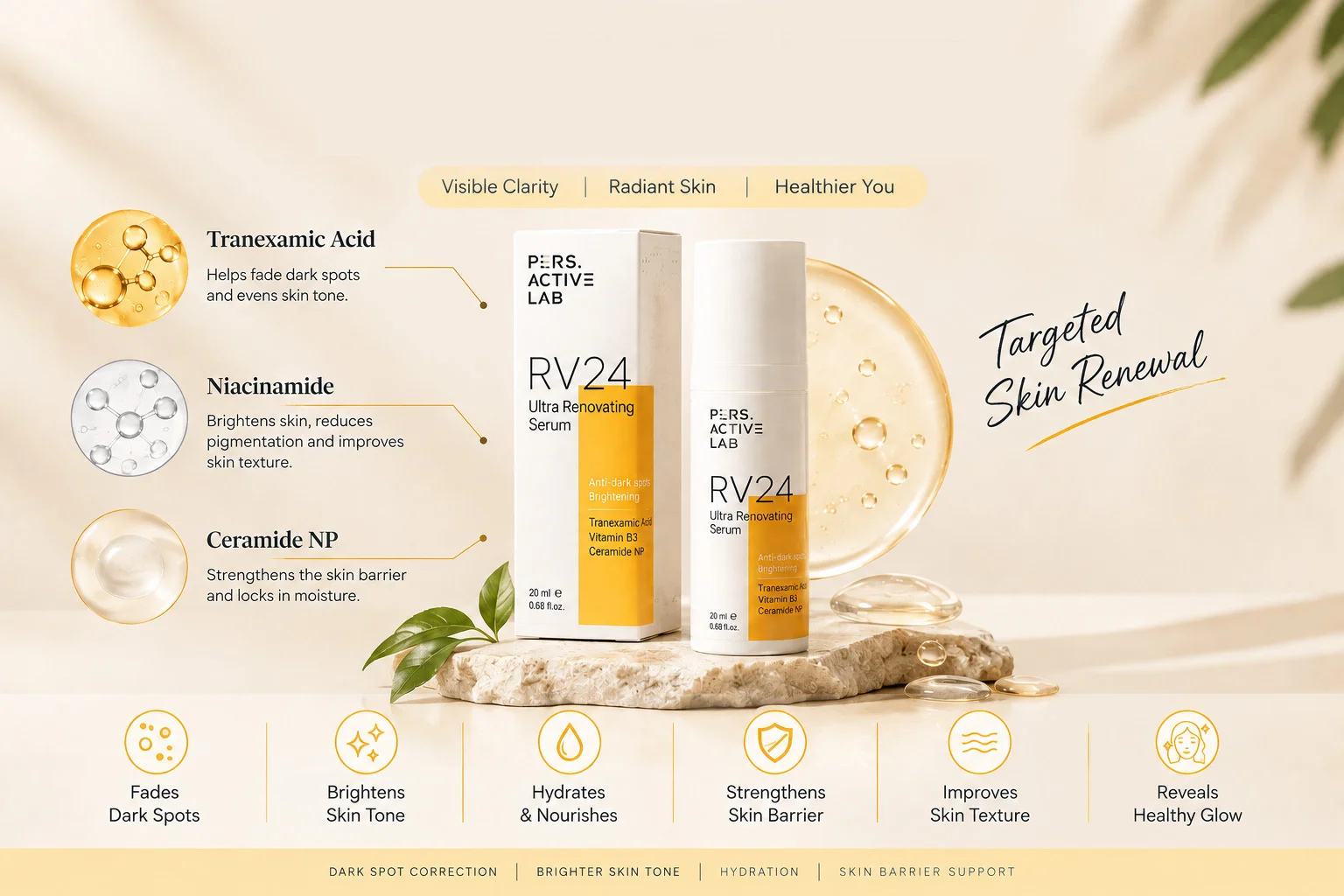
Tranexamic acid has been studied for pigmentation, especially melasma. Recent reviews support topical tranexamic acid. But results vary by formulation and condition.
Niacinamide is a form of vitamin B3. It has been studied for pigmentation and may support the skin barrier.
Sodium hyaluronate helps attract and hold water. Ceramide NP supports the skin barrier. This gives RV24 a place in a routine that targets visible pigmentation while also supporting hydration. But the serum cannot remove the cause of every pigmentation problem.
-
It cannot stop UV exposure.
-
It cannot prevent new acne.
-
It cannot treat every skin disease that causes pigmentation.
-
Sun protection still matters.
-
Treating active acne still matters.
-
Finding the right diagnosis still matters.
Look At The Pattern Of Your Pigmentation
The causes of skin pigmentation can often be understood better by looking at when and where the mark appeared. Ask yourself:
-
Did it appear after acne?
-
Did it appear after a rash?
-
Did you burn or injure the area?
-
Does sunlight make it darker?
-
Is the pigmentation on both sides of your face?
-
Is it a single spot or a larger patch?
-
Has it changed recently?
-
Did it appear without an obvious reason?
These details can help you understand what you are dealing with. They can also help a dermatologist make a better assessment.
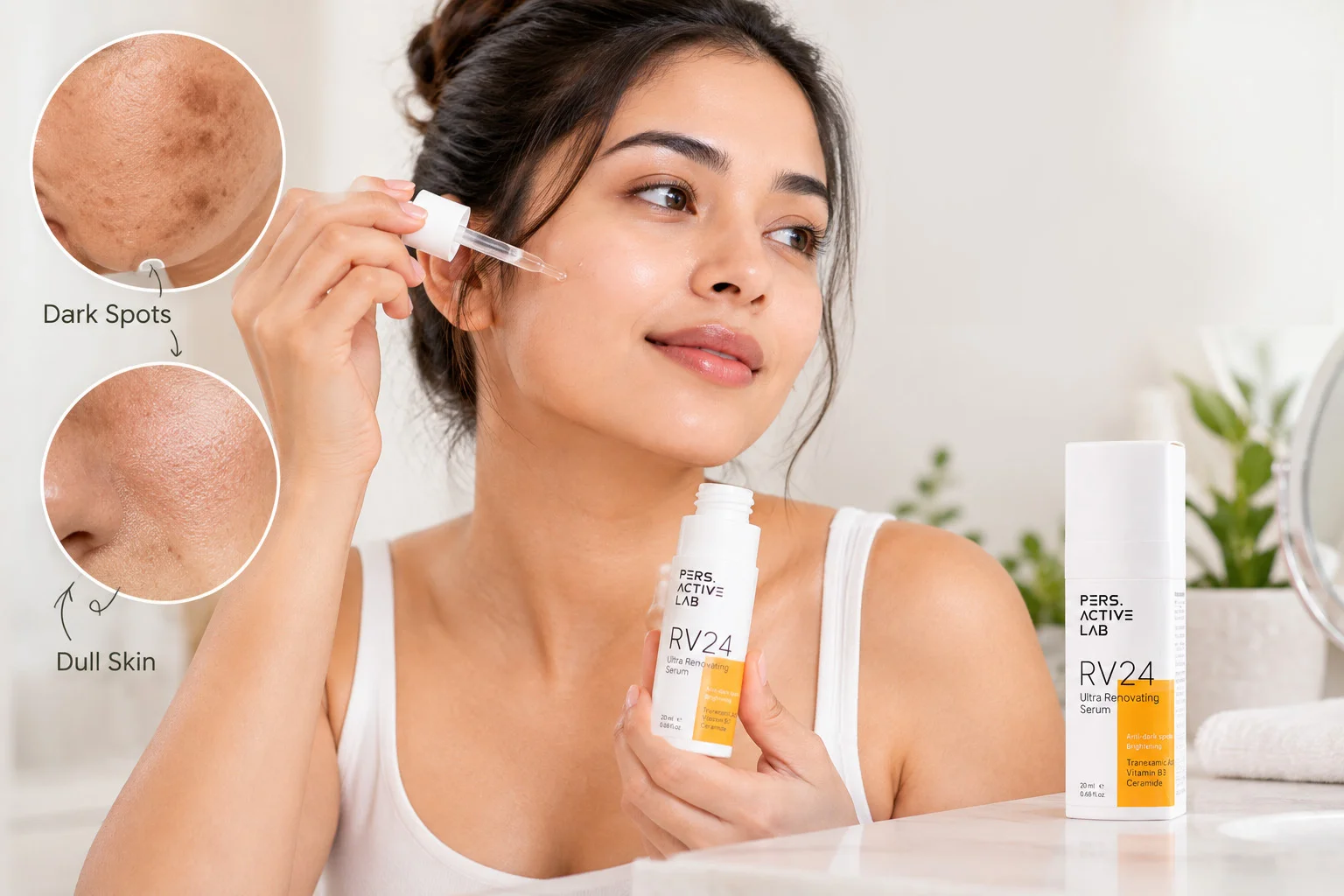
Dark Spots And Dullness Are Not The Same Thing.
The causes of dark spots are usually linked to excess or uneven melanin. The causes of dull skin can be much broader. You may have:
-
Dark spots with healthy-looking skin around them.
-
Dull skin with no dark spots.
-
Dark spots and dull skin at the same time.
For example, acne can leave brown marks. At the same time, harsh acne products can dry out your skin. You may then have pigmentation, dryness, and rough texture together. Treating only one part may not change the full look of your skin.
What This Means For Pigmentation On Face Concerns
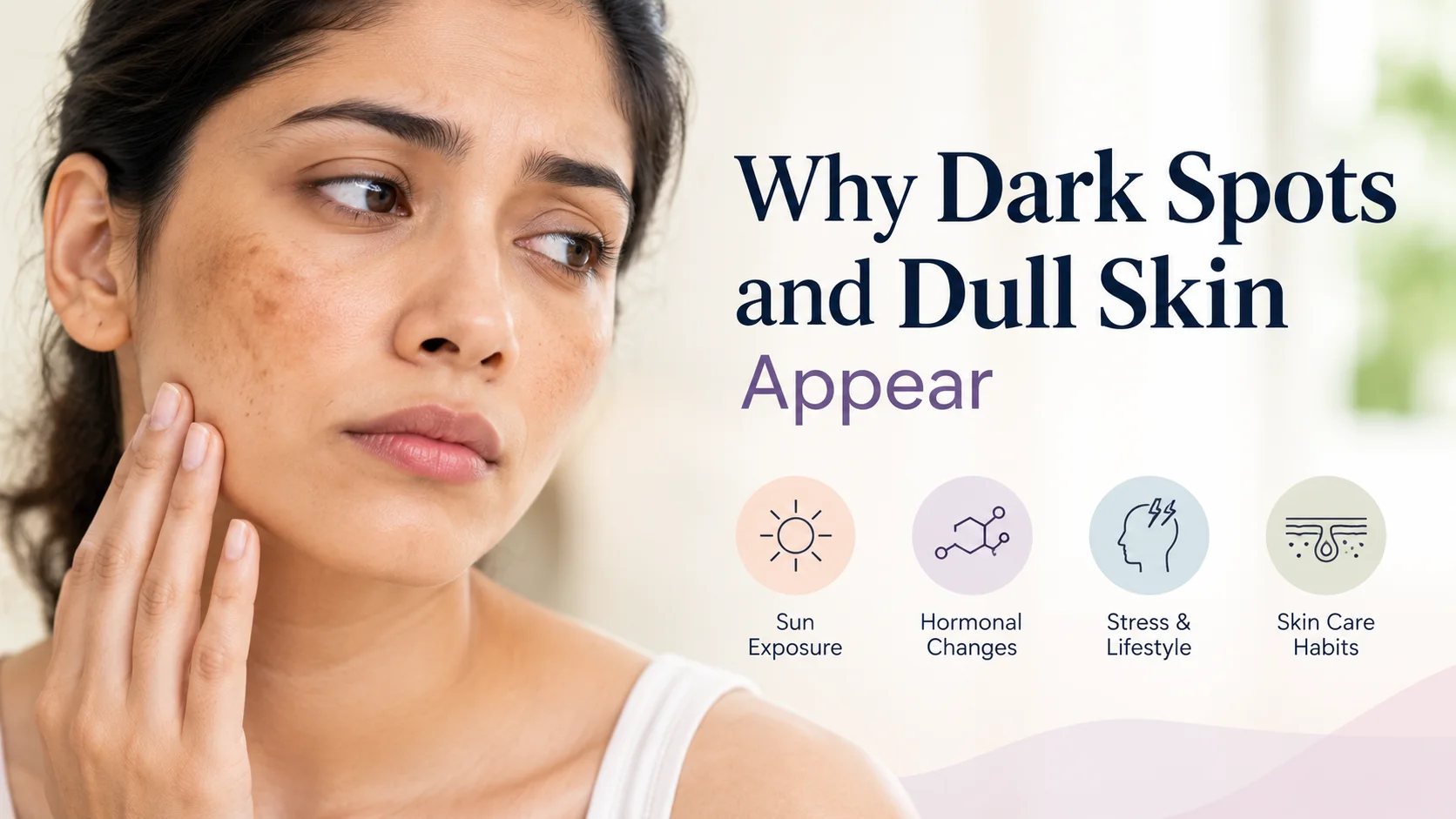
The pigmentation on the face that you see is the result of several skin processes. Sunlight can increase melanin. Inflammation can leave pigment behind. Hormones can affect conditions such as melasma. Pollution can add oxidative stress. Dryness can make your skin look rough and tired.
These factors can also overlap. That is why facial pigmentation needs to be understood in context. A brown mark left after acne is different from melasma. A temporary tan is different from a persistent pigment disorder. A rough, dry complexion is different from true hyperpigmentation. Knowing the difference helps you choose the right care.
Conclusion
The causes of dark spots and the causes of dull skin are often connected. But they are not the same. Sun exposure can increase melanin. Acne and other inflammation can leave brown marks. Hormones can play a role in melasma. Pollution can add stress to the skin. Dryness, poor sleep, and a weak skin barrier can make your face look dull.
Indian skin can be more prone to visible pigmentation after inflammation, especially in medium to deeper skin tones. This makes sun protection and gentle skin care especially important.
The 2026 Indian dermatologist survey also shows why this issue deserves attention. Sun exposure was the most commonly reported factor among 409 Indian dermatologists surveyed.
RV24 can be part of a routine for visible dark spots and uneven tone. PERS ACTIVE LAB lists tranexamic acid and Ceramide NP in the formula. But good pigmentation care starts before a serum. Protect your skin from the sun. Keep irritation under control. Treat active skin problems. Give your skin time. And when a pigment change looks unusual or keeps getting worse, get it checked.
FAQs
1. Why do dark spots appear after acne?
Acne causes inflammation. That inflammation can signal your pigment cells to make more melanin. The pimple may clear while the brown mark stays behind. This is called post-inflammatory hyperpigmentation.
2. Does tanning mean your skin is damaged?
A tan is a response to UV exposure. Your skin makes more melanin after exposure to UV radiation. A tan is therefore not a sign that your skin is becoming healthier.
3. Why does my skin look dull even when I do not have dark spots?
Dryness and a weak skin barrier can make your skin look dull. But, dullness does not always mean you have a pigmentation problem.
4. Can a dark spot be something other than pigmentation from acne or sun?
Yes. Melasma and several other skin conditions can cause facial pigmentation. A new, or unusual mark should be checked by a dermatologist instead of being treated as a simple dark spot.

 Member Center







 Successfully Added!